Qwen3.8–27B on Two Mid-Range GPUs, Measured on Release Day
From the publisher’s feed, collected in the ZeroLabs newsroom.

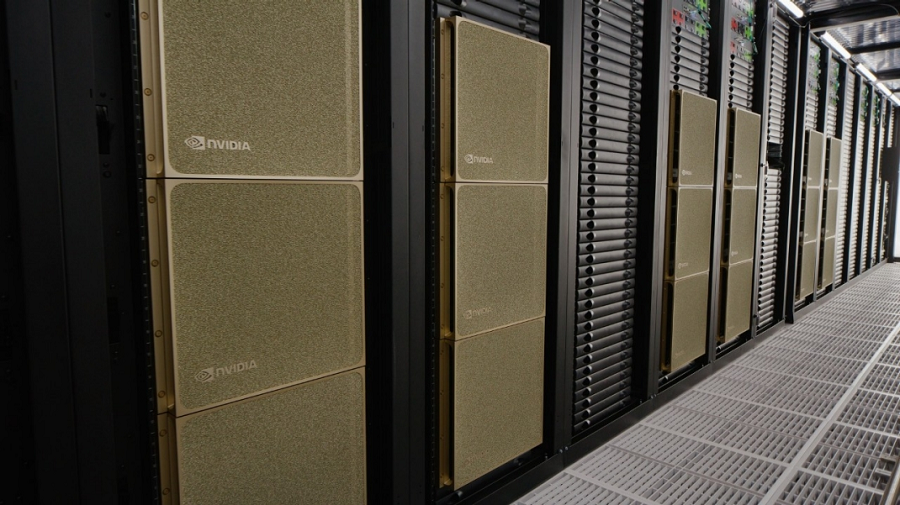
Everyone will publish the benchmark scores. Here is a less glamorous and more useful question: what does it actually cost to run on a home machine — and why that number is not up for negotiation.Two mid-range cards, 423 GB/s, and a model that must be read whole for every word. Image generated with Gemini.Qwen3.8–27B went up at 16:03 today. An hour later it was downloaded, verified byte for byte, and on the bench of a roughly €2,000 machine: a Ryzen 7 3700X with an RTX 4070 (12 GB) and an RTX 5060 Ti (16 GB), 64 GB of system RAM. Nothing else running, the model entirely in video memory.23.63 tokens per second, generation. Around 900 t/s reading the prompt.Two separate runs — one of mine, one launched by a watchdog script that benchmarked on its own — returned the same generation figure to the second decimal, with zero dispersion in both. Same machine, same build, so this is a stability check rather than an independent replication, but the generation number is not one to hold loosely.The prompt-processing figure is a different story, and worth stating plainly rather than rounding away: the two runs gave 936 ± 90 and 891 ± 57 tokens per second — 5% apart, with roughly 10% dispersion each. That is a real spread, not a rounding artefact, so the honest way to report prefill on this machine is “around 900”, not a decimal figure. Generation is bandwidth-bound and therefore boringly repeatable; prefill is compute-bound and batched across two cards over PCIe, and it shows.Speed here is arithmetic, not opinionQwen3.8–27B is a dense model: 27.3 billion parameters, every one of them traversed for every single token produced. In the quantisation used it occupies 16.68 GiB, and those 16.68 GiB must be re-read from video memory for each word it writes.Hence the sum: 16.68 GiB times 23.63 tokens per second comes to about 423 GB/s — which is exactly what the two cards can deliver working in sequence, at 90% of their theoretical ceiling. The speed does not depend on the model, the driver, or luck. It depends on how many bytes you must read and how fast the memory hands them over.A dense model has no knobs to turn. If you want twice the tokens per second, you need twice the bandwidth — or half the model.One exception, and it is worth naming precisely because I measured it three days ago on Muse Glimmer: speculative decoding does buy tokens per second without more bandwidth or less model, because a drafter proposes a block and the large model verifies it in a single batched pass. On mid-range cards that was worth 1.5–1.7×. It needs a compatible draft model, though, and this release doesn’t ship one — pairing Qwen3.8–27B with a smaller sibling is a test for another day. Everything below is the no-speculation baseline.That also settles the question of more aggressive quantisation without having to try it: cutting to 3 bits would land around 31 tokens per second, 2 bits around 37. Even stripped to the bone this model does not reach 40 on two mid-range cards.A dense model in an age of expertsThe interesting comparison is not with other 27-billion models, but with the family sitting next to it. On this same machine, a mixture-of-experts model of 80 billion parameters — activating only three per token — runs at 43.5 tokens per second: nearly double the speed, with triple the parameters.This is why mixture-of-experts models are the more democratic design: they separate knowledge from speed. The knowledge lives in the total parameter count, which costs only space; the speed depends on the few that are active. In a dense model, every gram of quality is paid for in bandwidth, on every token, linearly and forever.With a trade-off worth stating plainly: a mixture-of-experts model buys speed by spending capacity. The dense 27B occupies 17 GB; the 80B occupies 33 GB to run twice as fast. As long as you have the video memory it is an excellent bargain — but video memory is precisely the expensive thing right now.How much room it wantsThe model sits entirely on the cards, so system RAM is nearly irrelevant: under two gigabytes, just buffers. Everything else is video memory, and it grows with the context window.Under 1 GiB short out of 27. Margins are to be tested, not estimated.That last row deserves a note, because it is the most practical lesson of the day: it was short by less than one gigabyte out of twenty-seven. Video memory margins are not to be estimated, they are to be tested — and it is better to test them deliberately than to discover the limit through a service that crashes and restarts in a loop.What a single card would doHaving measured that this setup delivers 90% of its theoretical bandwidth, applying the same efficiency to a 24 GB card at 936 GB/s gives a reasonable projection: about 47 tokens per second, comfortably more than double. Not because the card is magic, but because one fast card avoids splitting the model into two halves that wait for each other.At 64K of context the model occupies 22.3 GiB: on a 24 GB card it would fit, but with nothing else running. That is the kind of margin to verify rather than assume.So, is it worth it?If you are after speed, no: 23 tokens per second make for comfortable reading but not a responsive assistant, and no quantisation changes that. If you are after 256K of context and eyes — it is multimodal — then the right comparison is not against the fast models, but against the other models that can look at an image. In that group, at comparable speed, it offers a far longer context.One small technical note that saves time for anyone trying it: despite the name, the file declares the architecture qwen35, the same as the previous generation. No rebuild required — searching your binary for qwen3_5 returns nothing and will convince you otherwise.Method. llama.cpp, llama-bench with a 256-token prompt, 256 tokens generated, 3 repetitions; model entirely in video memory, no other service running. Downloaded file sizes verified byte for byte against the HuggingFace API (17,923,394,624 and 927,607,488 bytes, re-checked at publication). The 128K failure is the runtime’s own error: a failed cudaMalloc of 884.62 MiB on device 0. The generation figure reproduced exactly across two runs; the prompt-processing figure did not — see above. Figures labelled as projections are stated extrapolations, not measurements.A note on method: the benchmark run and the first draft of this article were produced by an agentic pipeline (Claude Code by Anthropic) on my own hardware, within the hour of release. I then checked every figure against the raw logs before publishing — which is how the prompt-processing discrepancy above was caught and corrected. The analysis and the conclusions are mine, and everything here is reproducible: same runtime, same flags, same two cards.Qwen3.8–27B on Two Mid-Range GPUs, Measured on Release Day was originally published in Towards AI on Medium, where people are continuing the conversation by highlighting and responding to this story.