Supreme Court strikes down USPS mail-in voting rule
From the publisher’s feed, collected in the ZeroLabs newsroom.
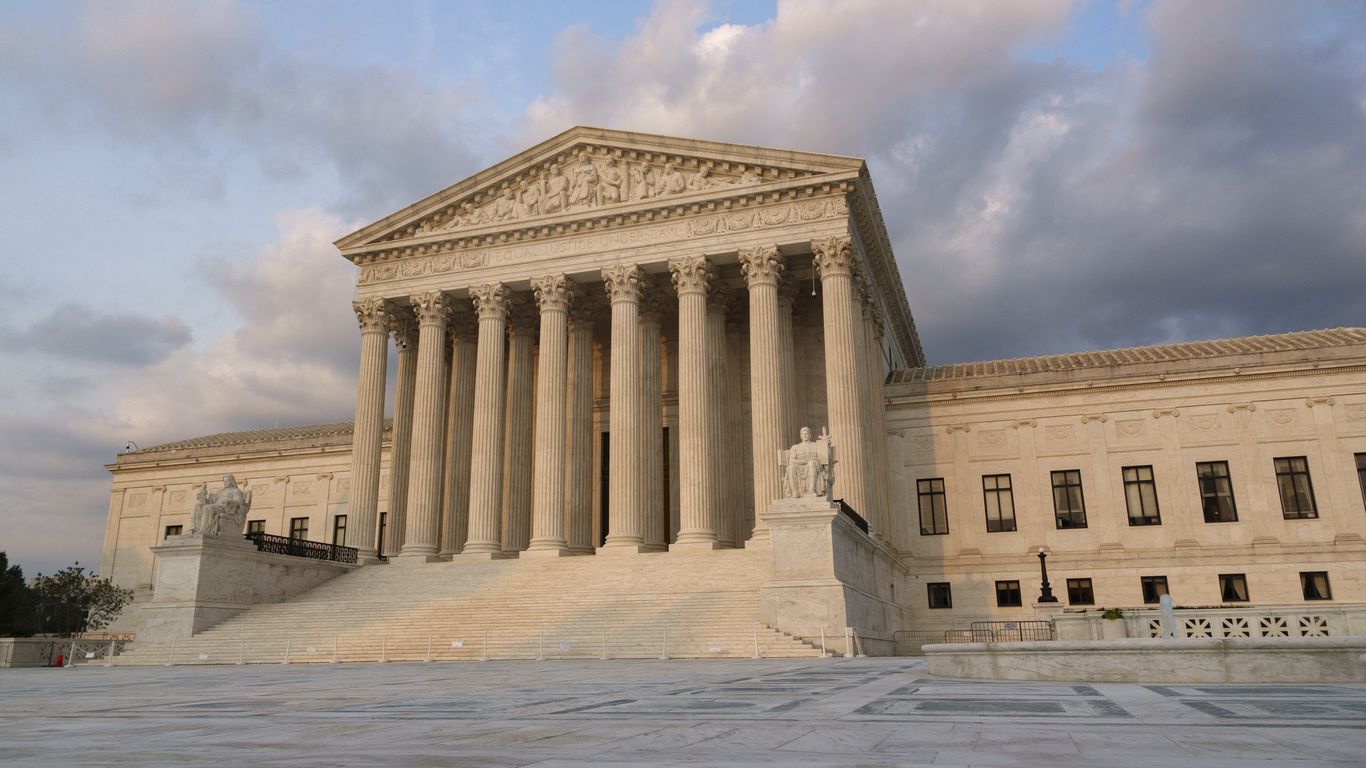
The Supreme Court struck down the U.S. Postal Service's rule restructuring mail-in voting Monday, halting a major Trump administration priority.The big picture: The decision is a major win for voting rights advocates and the states that challenged the administration's plan; it also reverses the Supreme Court's earlier green light for President Trump's mail-in voting order.The justices' prior unsigned order allowing the rule to proceed was not a ruling on the merits — but this time around, they decided the government is "unlikely to succeed on the merits of its challenge." Driving the news: While the court denied the administration's stance, the justices were divided on the merits of the case. Justice Brett Kavanaugh wrote in a concurring opinion with fellow Justice Ketanji Brown Jackson that "there is at least a fair prospect that the final rule falls within the Postal Service's statutory authority" but that applying the proposed rules would be "arbitrary and capricious" for the midterm elections as state and local officials "do not have sufficient time to reasonably implement the rule." Justices Samuel Alito and Clarence Thomas dissented in a separate opinion.Catch up quick: The Trump administration turned to the high court Thursday, asking it to pause an order from U.S. District Court Judge Indira Talwani that blocked key parts of the rule. The Obama-appointed judge found that the states were likely to succeed in their claims that it was unconstitutional and granted a two-week stay on implementing sections of the final rule, including provisions on standard ballot envelopes and registration for an online voter information portal.The rule also directs the agency to review ballot envelopes for compliance— though North Carolina began sending ballots to voters on Sept. 4 and Alabama will begin on Sept. 9.The other side: In his application to the high court, Solicitor General D. John Sauer acknowledged that ballots were to be imminently sent out in North Carolina and Alabama, arguing that "[o]nce those ballot envelopes enter the mailstream, there is no retrieving them; ordinary appellate review thus 'would come too late' to cover those ballots."He contended that Talwani's pause "imposes serious irreparable harm on the federal government, the States themselves, and the voting public."Zoom out: The decision is likely the final say on the rule during this election cycle, with even Talwani saying from the bench earlier this month that it was unclear how the government would implement the plans with November just around the corner.Steven Monteith, the executive vice president of the Postal Service, said in a declaration filed Thursday that the agency continues to make "refinements" to the portal, which he predicted would be available for "voluntary use by sometime next week."He added that under Talwani's restraining order, USPS was not mandating design review for state mail but has made review available for states that want to "voluntarily submit" envelopes to ensure they comply with the rule.Friction point: While the administration has dismissed concerns, a USPS whistleblower recently alleged that the agency defied court orders and rushed to build out the new ballot system, putting thousands of mail ballots at risk.The whistleblower said the Postal Service built the system in weeks, not the nine months to a year typically needed for a project of this complexity, Axios' Andrew Pantazi and Donica Phifer reported.The bottom line: The rule is just one front in the myriad ways the administration has tried—at times, unsuccessfully—to reshape elections, as seen in attempts to obtain state voter rolls and redraw congressional maps. Some of those efforts have been snuffed out in the courtroom, while others could have real impacts in November.Editor's note: This is a breaking news story and will be updated.