Mike Johnson's new set of promises to squash a House GOP revolt
From the publisher’s feed, collected in the ZeroLabs newsroom.
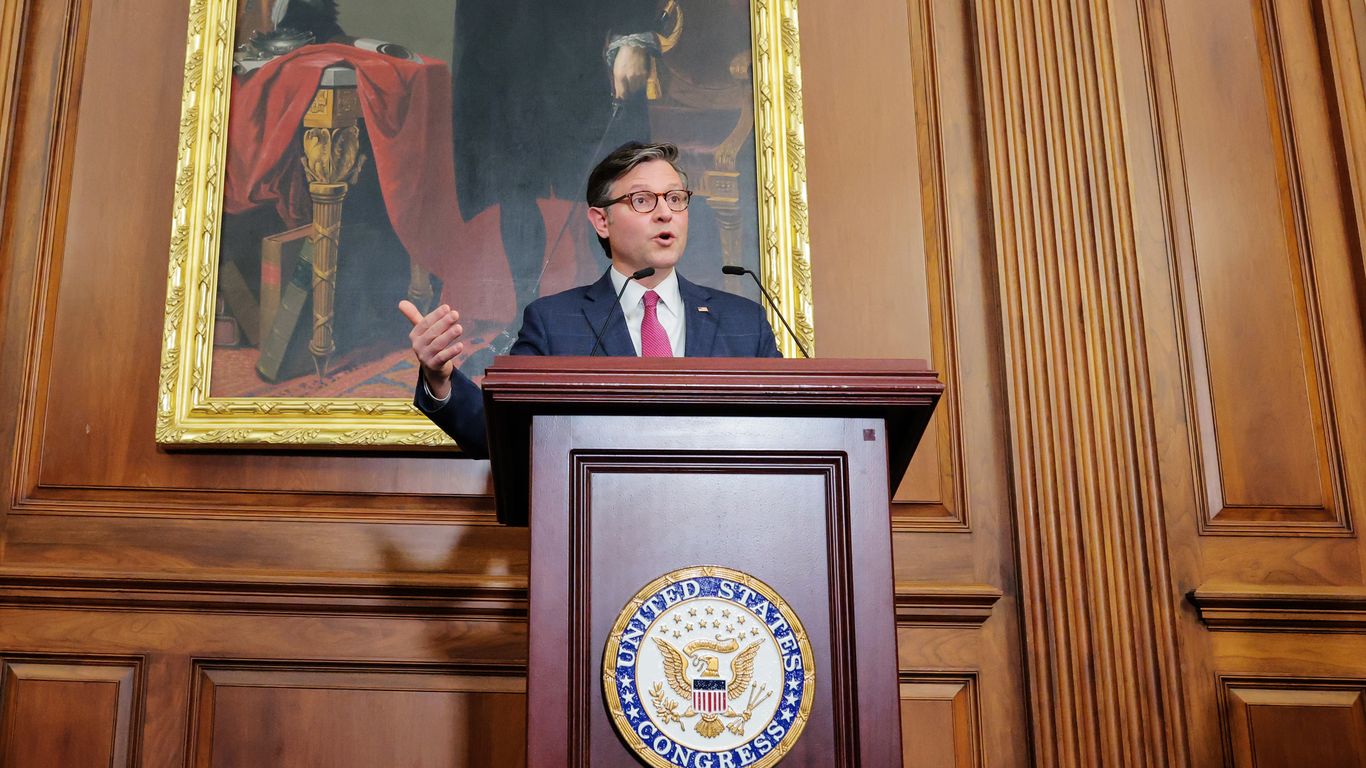
House Speaker Mike Johnson narrowly averted disaster Wednesday afternoon, salvaging the $900 billion defense authorization bill after cutting last-minute deals and phoning a friend: Secretary of State Marco Rubio.Why it matters: Conservatives supplied the votes, but they are threatening to tank the next spending bill if Johnson (R-La.) breaks his word."So we made a deal — and actually we talked to the secretary of state directly," Rep. Anna Paulina Luna (R-Fla.) told Axios, saying Rubio vowed to shut down alleged funding from NGOs to the Taliban.Johnson also promised to "go to war" to ensure that a ban on a central bank digital currency gets attached to the next appropriations bill, due in late January."It either happens, or a CR goes down," Luna said. "He's promised to be with us on that."💰 Luna extracted a promise on getting a future vote to ban members of Congress from trading individual stock. Johnson was noncommittal about the timeline, and Luna is still pressing forward with her discharge petition on the issue.Rep. Marjorie Taylor Greene (R-Ga.) said she flipped after Majority Leader Steve Scalise (R-La.) promised her bill, the Protect Children's Innocence Act, would get a floor vote next week."I made a deal and changed my NO vote on the rule to a Yes in exchange for a floor vote next week on my bill that is one of President Trump's key campaign promises and executive orders," she wrote on X.Driving the news: The procedural vote to bring the National Defense Authorization Act to the House floor was heading for an ignominious defeat earlier Wednesday.Johnson, Majority Whip Tom Emmer (R-Minn.) and Conference Chair Lisa McClain (R-Mich.) worked the floor, pressing defectors including Greene and Thomas Massie (R-Ky.).Massie held firm as the lone GOP "no." Luna joined Greene — along with Reps. Tim Burchett (R-Tenn.) and Lauren Boebert (R-Colo.) — in flipping to yes.The bottom line: Johnson kept the vote open for more than an hour — far shorter than his record-setting vote in July, when he held a vote open for seven-and-a-half hours during the "one big, beautiful bill" saga.