Predicting Fluid Behavior Before the Lab: Physics-Based Screening From AI Data Centers to…
From the publisher’s feed, collected in the ZeroLabs newsroom.

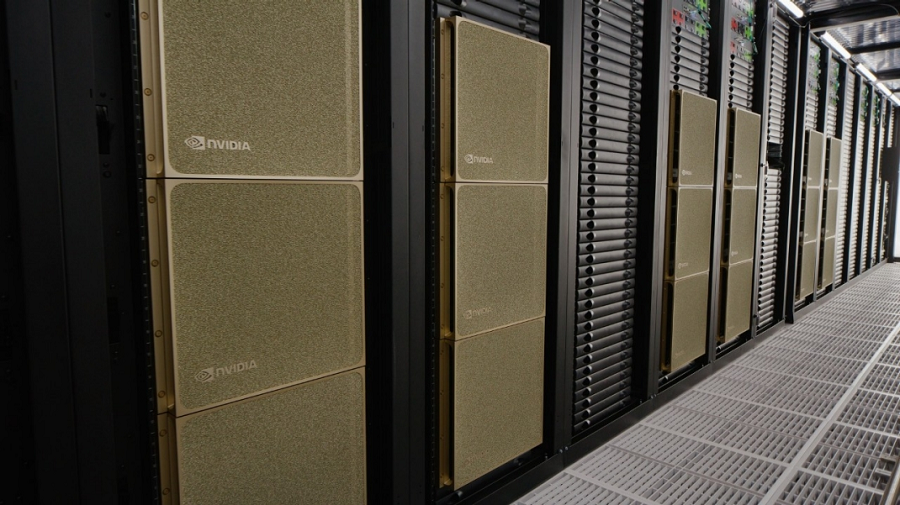
Predicting Fluid Behavior Before the Lab: Physics-Based Screening From AI Data Centers to SpacecraftOpen models for PFAS-free immersion coolants and vacuum outgassing, and what they got right and wrongSource: Image by the author.Disclosure: I used AI tools to help structure and edit this article. The models, code, data and results are my own.An immersion-cooled GPU rack and a satellite in hard vacuum look like opposite problems. One fluid bathes 1 kW chips at 40 °C. The other must not evaporate onto optics over 15 years in orbit. Both come down to one question: will this fluid behave where we need it?In both fields, that question gets answered the slow way. You blend, test, fail and repeat. I built open screening models for both problems instead, from published data and textbook physics, so the lab only sees candidates with a real chance. All code, data and 26 unit tests are on GitHub (fluids-heat-vacuum).This article walks through both studies: what I modeled, what the models found, and which assumptions mattered most.Two specs, one problem: PFASBoth fields lean on fluorinated fluids, and both are being pushed off them. Many high-performance immersion coolants are fluorinated. Space mechanisms run on perfluoropolyether (PFPE) oils, and a 2025 ESA project reported that no fully PFAS-free space grease yet exists.Each field also has a hard pass/fail spec.Immersion cooling (Open Compute Project base spec) [4]:Figure of merit FOM1 above 35 (Tier 1), FOM2 above 19Flash point above 150 °CViscosity at 50 °C below 0.015 Pa·sDielectric constant of 2.3 or less from 20 MHz to 40 GHzVacuum (ASTM E595) [5]:Total mass loss (TML) of 1.0% or less after 24 h at 125 °CCollected volatile condensable material (CVCM) of 0.10% or lessThe common thread is that vapor pressure, molar mass and viscosity decide most of the outcome. You can model those from published data before anyone opens a bottle.Part 1: PFAS-free immersion coolantsThe goal was a non-fluorinated fluid that meets the OCP spec and beats a polyalphaolefin (PAO) benchmark. I started from eleven published base stocks: PAOs, synthetic esters, a natural ester, a mineral oil and a renewable isoparaffin. Every value in the data file is tagged as data sheet, estimate or proxy.Each blend runs through four layers of open models:Properties. Refutas blending and the Walther equation (ASTM D341) for viscosity, Hu–Burns for flash point, the Filippov equation for thermal conductivity, and Lichtenecker mixing for dielectric constant.The chip. A copper plate-fin heat sink on a 1 kW chip, fed 6 L/min at 40 °C, with laminar developing-flow correlations.The facility. A 1 MW loop with a plate heat exchanger, 60 m of pipe and a 65% efficient pump, priced at New Jersey electricity rates.Signal integrity. A 50 Ω microstrip with the fluid as its cover dielectric, to check that the fluid doesn’t detune high-speed traces.The chip model held the first surprise. Flow in the fin channels is laminar, at a Reynolds number of about 16, so thermal conductivity and volumetric heat capacity dominate and viscosity barely matters. The turbulent figure of merit I used in round 1 misranked the fluids, so I retired it.The second surprise came from the facility model. I had first treated pumping as negligible. It is about 2% of IT power, or roughly $20,000–34,000 per MW a year depending on the fluid. That turned viscosity back into a real cost, just at the pump instead of the chip.Chip cooling vs. pumping cost for candidate blends. Source: Image by the author.Searching blends and what came outI searched blends of up to three stocks, each at least 5%, with a multi-objective evolutionary optimizer (NSGA-II) [1] under the OCP limits. The objectives were chip cooling, pumping cost and the biodegradable share. Three blends pass the spec at worst-case permittivity. Here they are against the PAO benchmark (PAO 4 88% + PAO 2 12%, worst-case dielectric constant 2.08):Lead A (PAO 4 40% + Priolube 1976 35% + PAO 2 25%): chip 0.40 °C cooler, pumping $3,122 less per MW a year, worst-case dielectric constant 2.28.Lead G (renewable isoparaffin 62% + Priolube 1976 38%): chip 0.25 °C cooler, pumping $5,477 less per MW a year, dielectric constant 2.29, and 100% readily biodegradable.Lead P (PAO 4 81% + Priolube EF 7010 19%): chip 0.28 °C cooler, pumping $118 more per MW a year, dielectric constant 2.22.All-ester (EF 7010 52% + Priolube 1976 48%): chip 1.31 °C cooler, pumping $4,600 less, but dielectric constant 2.90, which fails the spec.The all-ester blend is the best thermally but fails the 2.3 dielectric limit. That points to the one number that governs the whole design: ester permittivity at 20–40 GHz is unpublished. Esters measure about 3 at 100 kHz, and the value falls at GHz by an unknown amount. That gap alone sets how much ester a blend can carry.To check how robust the leads are, I ran 300 Monte Carlo draws on the property inputs and sampled ester permittivity anywhere from 2.2 up to its low-frequency value. Lead A came out cooler than PAO in 97% of draws and cheaper to pump in 97%. The all-ester blend met the dielectric limit in only 5%.I then re-ran the search independently on IntelliForm’s NSGA-III and TOPSIS engine [2]. Without being given the earlier answer, it found 35 Pareto blends. Its coolest fully biodegradable blend matched Lead G to within one percentage point.Part 2: Predicting outgassing in vacuumAnything flown on a spacecraft must pass ASTM E595: 24 hours at 125 °C in vacuum, with a 25 °C plate collecting whatever evaporates. NASA Goddard publishes every result [3]. After cleaning, the database holds 12,842 tests from 1,476 manufacturers.54% of them fail. Process matters as much as chemistry: vacuum-baked materials pass 69% of the time against 45% otherwise. In 12 product families tested both ways, baking raised the pass rate from 1% to 59%.E595 pass rates by material class, NASA outgassing database. Source: Image by the author.I tried two ways to predict the result before testing.A statistical model. A logistic regression on material class, usage, manufacturer, process flags and character n-grams of the product name. Cross-validated by product family, so the same product never sits in both train and test, it reaches AUC 0.81 and 74% accuracy. Testing only the top 30% of its picks raises the pass rate from 46% to 79%. The ceiling is real, though: repeat tests of the same family agree with each other only 86% of the time, and the database records trade names, not compositions.A physics model. The E595 sample cup behaves like an effusion cell. My simulator integrates evaporation through the exit port (Hertz–Knudsen flux at each component’s Raoult partial pressure), capture on the collector, and re-evaporation from it. Nothing is fitted to the test results. Across five reference fluids spanning more than a 100,000-fold range in vapor pressure, it predicts total mass loss within a factor of 2.5.Predicted vs. measured total mass loss, ASTM E595 simulator. Source: Image by the author.The physics model also yields a design rule for a single low-volatility fluid. It needs only two properties: vapor pressure at 125 °C and molar mass.import mathdef passes_e595(p_125c_pa, molar_mass_kg_mol): """Screening rule for a single low-volatility fluid (linear-loss regime).""" x = p_125c_pa * math.sqrt(molar_mass_kg_mol) return {"TML "CVCM That rule turns a 24-hour vacuum test into a target a molecule designer can aim at. It also connects back to lubricants: a PFAS-free oil that works at −40 °C and evaporates slowly enough for a 15-year mission would pass E595 comfortably.Five lessons for anyone screening materials with modelsCheck the flow regime before you trust a figure of merit. A textbook turbulent metric misranked every fluid in a laminar heat sink.Model the whole system, not just the part. Viscosity barely mattered at the chip, but it cost thousands of dollars per MW a year at the pump.Find the one unknown that decides the answer, and measure that first. Here it is ester permittivity at 20–40 GHz. One measurement settles more than any amount of optimizing.Split validation by family, not by row. Near-duplicate products leak between train and test and inflate the score. Also know the noise ceiling: if repeat tests agree 86% of the time, no model will beat that.Physics travels further than statistics. The metadata model can’t say why a material fails. The effusion model can, and it hands a designer a target.ClosingThese are screening models, not certification. Oxidation stability, materials compatibility and breakdown voltage still need the lab, as do closed-cup flash points. What the models do is shrink the lab plan to a few measurements that matter: ester permittivity at GHz, closed-cup flash and pour point for three leads, and E595 runs on candidates that already clear the design rule.A GPU rack and a satellite ask the same question of a fluid. Open data and textbook physics answer most of it before the first experiment. You can explore the blends yourself in the browser-based Fluid Selector, which reproduces the Python models to within 0.01%. The code is on GitHub.References[1] K. Deb, A. Pratap, S. Agarwal and T. Meyarivan, “A fast and elitist multiobjective genetic algorithm: NSGA-II,” IEEE Trans. Evol. Comput., vol. 6, no. 2, pp. 182–197, 2002.[2] S. S. Makani, “From Benchmark to Production: A Surrogate-Assisted Multi-Objective Optimization Framework for Industrial Chemical Formulation at Scale,” Digital Discovery, Royal Society of Chemistry, 2026, doi: 10.1039/D6DD00112B.[3] NASA Goddard Space Flight Center, “Spacecraft Material Outgassing Data,” data.nasa.gov.[4] Open Compute Project, “Base Specification for Immersion Fluids.”[5] ASTM International, ASTM E595, “Standard Test Method for Total Mass Loss and Collected Volatile Condensable Materials from Outgassing in a Vacuum Environment.”Predicting Fluid Behavior Before the Lab: Physics-Based Screening From AI Data Centers to… was originally published in Towards AI on Medium, where people are continuing the conversation by highlighting and responding to this story.